September brings spring growth across Australia and New Zealand, and pedestrian routes can change quickly after rain, irrigation and warmer weather. Leaf litter, wet clippings and organic growth can make paths slippery for staff, visitors, contractors, students, patients and the public.
We treat slip prevention as an operational WHS task, not just a presentation issue. Commercial garden maintenance needs to work alongside cleaning, repairs, drainage management and site inspections to keep access routes clear and safe.
Why Does Spring Growth Increase Commercial Slip Risks?
Vegetation does not stop at the garden edge. Leaves, seed pods, petals, berries, mulch and grass clippings often collect where planted areas meet concrete, pavers, kerbs, timber edging and ramps.
Once these materials become wet, they can hold moisture against hard surfaces long after rainfall has stopped. They may also be carried inside on shoes and trolley wheels, creating hazards around entry mats, foyers and loading doors.
Spring risks are often highest around:
- Building entries, external stairs and accessible paths are high-risk areas.
- Staff courtyards, car parks and loading areas are high-risk areas.
- Public transport interchanges and pedestrian links are high-risk areas.
- Emergency exits, evacuation paths and assembly routes are high-risk areas.
Gardens form part of facilities operations when vegetation affects access, drainage, lighting or pedestrian movement. In Australian jurisdictions that apply model WHS laws, PCBUs must eliminate or minimise foreseeable slip risks so far as is reasonably practicable under the relevant state or territory Work Health and Safety Act, such as the Work Health and Safety Act 2011 (NSW). In Victoria, equivalent duties sit under the Occupational Health and Safety Act 2004 (Vic); in New Zealand, PCBUs have duties under the Health and Safety at Work Act 2015 (NZ).
How Does Commercial Garden Maintenance Control Surface Hazards?
Commercial garden maintenance can reduce exposure by removing organic debris before it breaks down, becomes saturated or spreads across walkways. This is especially relevant beneath deciduous trees, near drainage grates and at high-traffic entrances.
Pruning also has a safety role. When plants grow across path edges, obscure stairs or reduce sightlines near ramps, people may not see wet patches, level changes or other hazards in time.
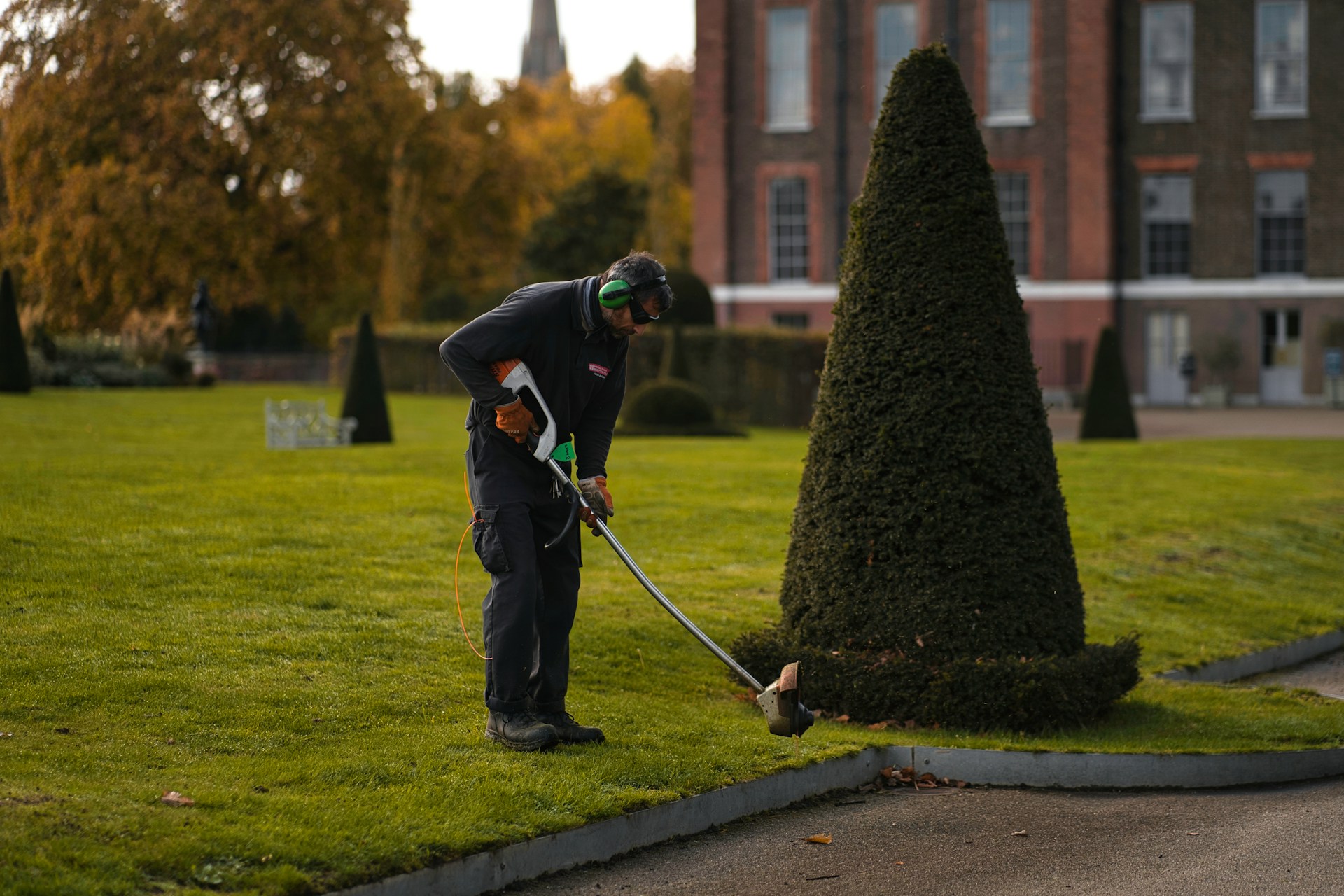
Our grounds teams treat mowing and edging as more than appearance work. Clippings need to be removed from hard surfaces, rather than blown into drains or left where they can become wet and slippery.
After each service, we recommend checking path edges for issues that may be hidden by growth or debris, including loose pavers, lifted edging, erosion and soil washed onto access routes. Garden maintenance supports hazard control, but it does not replace drainage repairs, surface remediation or slip-resistant flooring where those controls are needed.
Which Spring Conditions Create The Highest Risks?
Rainfall is only one source of water on a commercial site. Overwatering, damaged sprinkler heads, poorly directed irrigation and blocked drains can leave paths wet before early shifts, school drop-off periods or busy arrival times.
Shade and moisture create favourable conditions for algae, moss and lichen. Older concrete, pavers, timber decks, ramps, retaining-wall steps and covered pedestrian links can all require closer inspection when organic matter builds up.
Seasonal issues vary between sites. Flowering trees may drop petals, pods or berries, while some deciduous species shed leaves later in the season. A pre-spring review should identify the plants and locations that create repeat debris problems, rather than relying on a generic gardening schedule.
Risk also depends on who uses the site. Healthcare settings may have visitors with limited mobility, education sites have frequent movement between buildings, and transport facilities may operate continuously through wet weather. Controls should match pedestrian volume, access arrangements and the users most likely to be affected.
How Should Maintenance And WHS Records Be Managed?
A spring maintenance schedule should allow for more frequent inspections and cleaning when growth and rainfall increase. We recommend setting service frequency according to vegetation type, foot traffic, irrigation patterns, known drainage issues, weather exposure and previous incidents or near misses.
Routine visits should be supported by trigger-based responses. Heavy rain, high winds, storms, mass leaf fall, irrigation faults and reports of slippery areas may all require additional attendance.
Grounds work also needs safe work planning. SWMS should address plant and equipment use, wet-surface work, manual handling, chemical controls where applicable, traffic management, pedestrian separation and exclusion zones around active work areas.
Facilities managers should be able to review records such as:
- Scheduled service reports and attendance logs should be retained.
- Inspection checklists and photographic defect records should be retained.
- Work orders, repair requests and escalation notes should be retained.
- Closure records showing when hazards were rectified should be retained.
These records support the site WHS risk-management process. We identify hazards, consider who may be exposed, apply controls, communicate residual risks and review whether the controls are working after rain events, incidents or changes to site conditions.
Safe Work Australia guidance on workplace falls can help inform this process, but a checklist alone does not prove compliance. State and territory requirements should also be checked, and defects need timely action. In schools and other general education sites, applicable WHS or OHS laws, site policies and documented daily safety checks govern outdoor-area safety. Australian approved education and care services regulated under the NQF must also meet the relevant National Quality Standard, Education and Care Services National Regulations, ACECQA guidance and service policies.
What Should Facilities Teams Inspect Before Spring Rain?
Pre-spring inspections should focus on the points where planted areas meet public access routes. Building entries, accessible paths and emergency egress routes should receive priority because a small amount of debris or water can affect many people.
During inspections, we look closely at:
- Inspect paths, ramps, stairs, handrails and surface transitions.
- Inspect drains, grates and gutters blocked by mulch or leaf litter.
- Inspect irrigation heads that overspray footpaths or create runoff.
- Inspect tree canopies, garden edging and plants affecting lighting or visibility.
- Inspect pavers lifting near garden beds, plus soil or gravel washing onto paths.
Questions matter as much as the checklist. Is water pooling after irrigation? Are plants blocking a view of stairs? Has runoff exposed a trip point? Are garden beds sending mulch into drains or across pavement after rain?
Immediate controls may include isolating a slippery area, placing warning signage, removing debris and arranging urgent cleaning. Longer-term rectification may involve drainage repairs, irrigation adjustments, vegetation replacement, improved edging or surface works.
How Can Your Site Prepare For Safer Spring Access?
A practical spring review starts with the routes people use every day, including where they walk, queue, unload deliveries and move between buildings. Confirm who inspects these areas, who removes debris, who raises repair requests and how hazards are communicated to occupants and contractors.
Service frequencies should then match actual site conditions, rather than a fixed calendar. Inspection findings, incident reports and recurring wet-weather issues will show whether controls are keeping access routes clearer, drier and safer through spring.
Keep Spring Access Routes Safer
White Spot Group can coordinate commercial garden maintenance with minor repairs to address vegetation, drainage and surface issues affecting pedestrian access. Our team works from site observations and documented maintenance requirements to support practical WHS controls. To discuss your facility’s spring maintenance priorities, contact us for a tailored scope of works.