Importance of cleanliness in the workplace
Cleanliness in the workplace is crucial for several reasons.
Firstly, a clean and hygienic workplace protects the health and wellbeing of employees, reduces hazards and lowers the likelihood of sickness and absenteeism.
Secondly, a tidy and organized workspace can lead to increased productivity and efficiency, as employees can focus on their tasks.
Thirdly, a clean workplace also creates a positive impression on visitors and clients, reflecting a sense of professionalism and creating a positive experience.
Overall, maintaining cleanliness in the workplace is essential for creating a safe, healthy, and productive environment for employees and guests.
Different types of cleaning
General cleaning involves the regular maintenance of common areas such as offices, bathrooms, and kitchen areas. This typically includes tasks such as mopping, vacuuming, dusting, and emptying waste bins. Deep cleaning, on the other hand, goes beyond the regular maintenance and involves a more thorough and intensive cleaning of all areas of the workplace, including hard-to-reach places and neglected areas. A workplace needs both to stay clean and healthy.
General Cleaning
General cleaning means the routine, everyday cleaning that keeps a workplace tidy and hygienic: vacuuming and mopping floors, dusting, wiping and disinfecting surfaces, cleaning washrooms and kitchens, and emptying bins. It is also called routine or regular cleaning, and it is usually done daily or a few times a week.
Regular cleaning of workspaces, common areas and high-touch surfaces helps stop the spread of germs. It keeps the office presentable for clients and visitors, and it makes the workplace a more pleasant place to be.
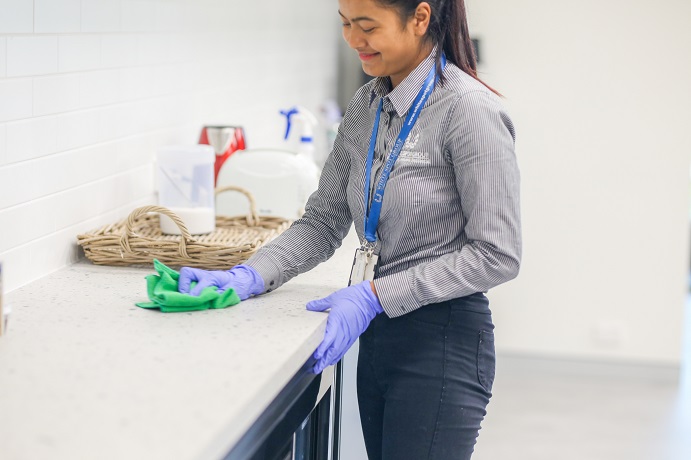
Examples of tasks included in general workplace cleaning
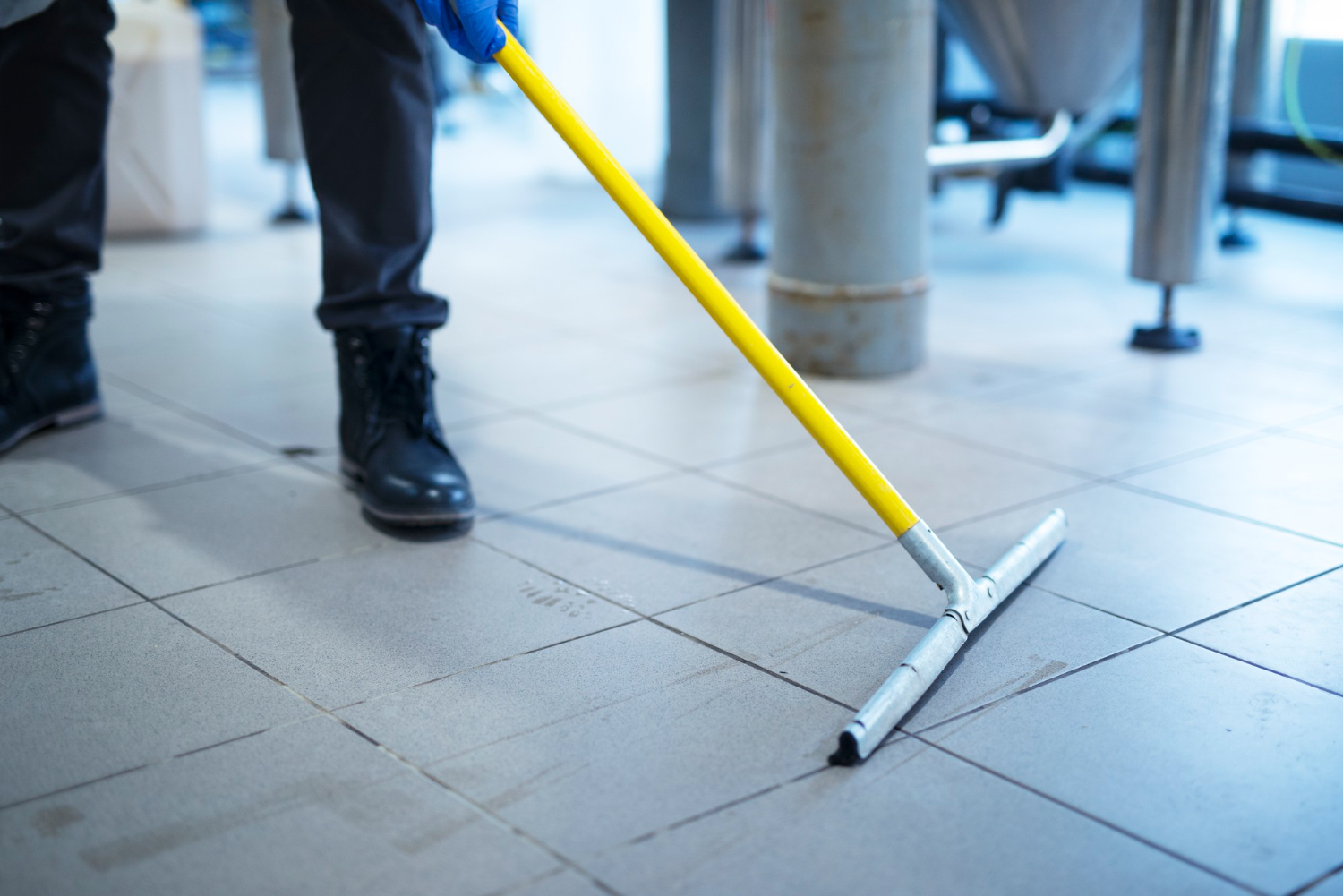
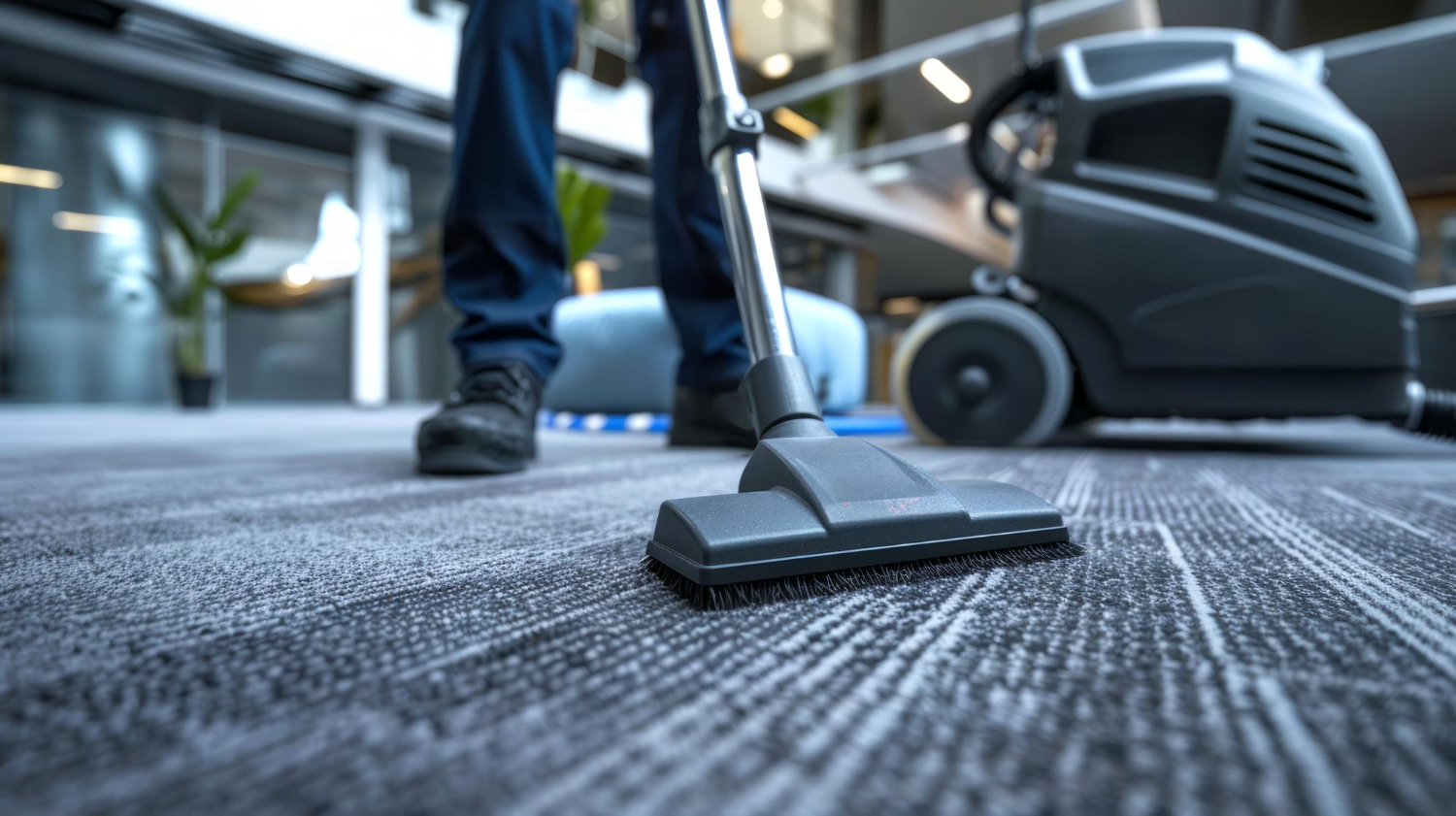
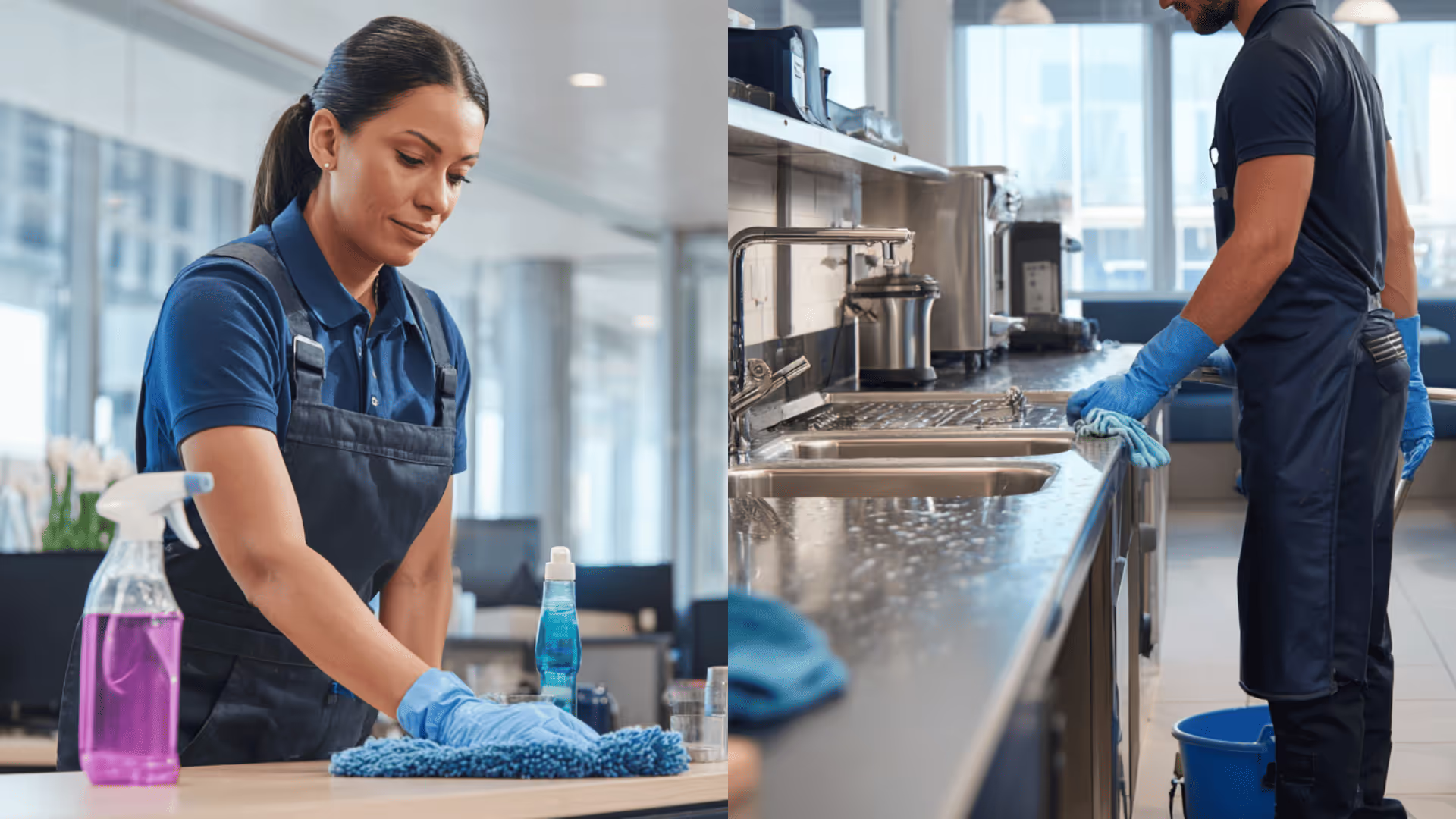
General workplace cleaning tasks may include vacuuming and mopping floors, dusting surfaces, cleaning and sanitizing restrooms, emptying waste bins, and wiping down windows and glass doors. These tasks are essential for maintaining a clean, safe, and organized work environment for employees and visitors. In addition, cleaning and stocking supplies and consumables in break rooms and common areas, disinfecting high-touch surfaces such as doorknobs and light switches, and removing any clutter or debris are also typical tasks included in general workplace cleaning. Periodic deep cleaning of carpets, upholstery, and hard-to-reach areas, as well as maintaining cleanliness in specialized workspaces such as industrial kitchens or laboratories, may also be part of the overall cleaning responsibilities in a workplace.
Benefits of regular general workplace cleaning
Regular general workplace cleaning provides numerous benefits for both employees and employers. Firstly, a clean and organized work environment contributes to the overall well-being of employees, leading to increased productivity and morale. It also helps in reducing the spread of germs and illnesses, resulting in decreased absenteeism and healthcare costs. Additionally, a clean workspace creates a positive impression on clients and visitors, enhancing the company's professional image. Regular cleaning also prolongs the lifespan of office equipment and prevents the accumulation of clutter, which in turn improves safety and minimizes the risk of accidents. Overall, investing in regular workplace cleaning not only fosters a healthy and pleasant work environment, but also contributes to the overall success and efficiency of the business.
Deep Cleaning
Deep cleaning means a thorough, top-to-bottom clean of the whole workplace, including the areas routine cleaning does not reach: high surfaces, behind and under furniture, inside appliances, carpets, upholstery and hard floors. It is done less often than general cleaning, usually every few months.
A deep clean also includes sanitising and disinfecting high-touch surfaces such as door handles, light switches and shared equipment. The goal is to remove the dirt, grime and germs that build up over time and that day-to-day cleaning leaves behind.
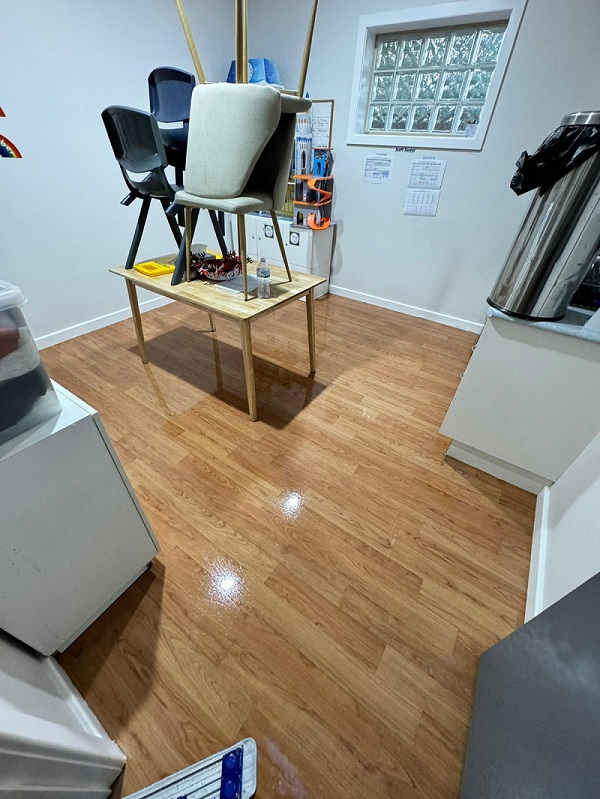
Examples of tasks included in deep cleaning
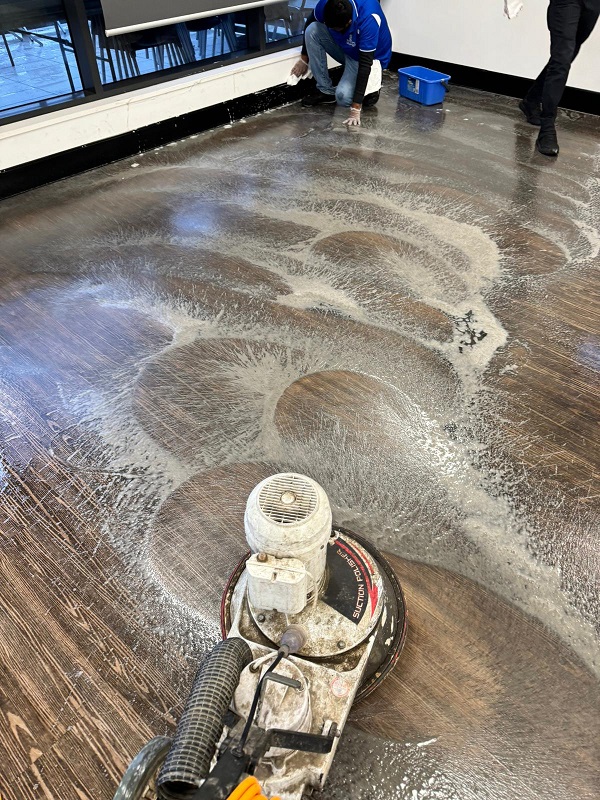
Deep workplace cleaning includes a variety of tasks aimed at thoroughly cleaning and sanitizing the entire work environment. Examples of tasks included in deep workplace cleaning may consist of cleaning and disinfecting all surfaces, including desks, tables, and countertops. It may also involve carpet steam cleaning, hard floor scrubbing, floor strip and seal cleaning, commercial kitchen rangehood cleaning, warehouse high pressure cleaning, bathroom deep cleaning, high window cleaning, internal and external window cleaning as well as sanitizing high-touch areas such as door handles, light switches, and shared equipment. Additionally, deep cleaning may entail the cleaning of restrooms, break rooms, and kitchen areas to ensure a hygienic work environment for employees. Other tasks could include dusting and wiping down all surfaces, cleaning windows, and removing any buildup of dirt and grime from hard-to-reach areas. Overall, deep workplace cleaning aims to create a clean and healthy workspace for all employees.
Benefits of deep cleaning for the workplace
Deep cleaning for the workplace offers several benefits.
Firstly, it brings the workplace back to a like-new condition and creates a more pleasant place to work.
Secondly, it reduces maintenance costs in the long run. Regularly maintained floors, carpets, fixtures and equipment last longer and need replacing less often.
Thirdly, it creates a healthier environment for employees and visitors by removing dust, dirt and germs that can cause illness. A clean, tidy workplace also reduces stress and supports a more organised and efficient workflow.
Finally, a clean and well-maintained workplace reflects well on the company and makes a good impression on clients and visitors.
Key Differences Between General Cleaning and Deep Cleaning
The easiest way to see the difference is to put the two side by side.
- How often: general cleaning is done daily or weekly. Deep cleaning is usually done every three to six months.
- How thorough: general cleaning covers the visible, everyday surfaces. Deep cleaning goes under, behind and inside, and removes dirt that has built up over time.
- Typical tasks: general cleaning means vacuuming, dusting, wiping surfaces, cleaning washrooms and emptying bins. Deep cleaning adds carpet steam cleaning, hard floor scrubbing, strip and seal, high cleaning and detailed disinfection.
- Purpose: general cleaning keeps the workplace tidy and presentable from day to day. Deep cleaning resets it and deals with what routine cleaning misses.
You need both. Routine cleaning keeps standards up between visits, and deep cleaning stops problems from building up underneath.
When to Use General Cleaning vs Deep Cleaning
When deciding between general cleaning and deep cleaning for workplace cleaning, it's important to consider the level of cleanliness required and the frequency of the cleaning. General cleaning, such as dusting, vacuuming, and surface wiping, is suitable for regular maintenance to keep the workplace presentable and free from light dirt and grime. Deep cleaning, on the other hand, involves more intensive cleaning tasks like scrubbing, sanitizing, and detail cleaning of hard-to-reach areas. This is typically done on a less frequent basis, such as quarterly or semi-annually, to maintain a high level of cleanliness and hygiene. Ultimately, the choice between general cleaning and deep cleaning depends on the specific cleaning needs of the workplace and the desired level of cleanliness.
When Should You Move from Routine to Deep Cleaning?
Some situations call for a deep clean straight away, regardless of the schedule:
- an outbreak of flu, gastro or another infectious illness;
- an incident involving blood or other body fluids;
- repeated slips in kitchens or industrial areas caused by residue build-up;
- contamination in food preparation, medication or clinical areas.
Other signs build up more slowly, and facility managers often notice them first:
- visible staining, scale or biofilm in washrooms;
- persistent odours in carpets, soft furnishings or locker rooms;
- complaints about stuffy rooms or poor air quality;
- mould flagged in HVAC inspections or visible on surfaces;
- housekeeping issues raised in ISO, client or safety audits.
When these signs appear, a deep clean is no longer optional. It becomes part of managing work health and safety (WHS) risk on your site.
How Often Should You Deep Clean?
General cleaning happens daily or weekly. Deep cleaning runs on a longer cycle that depends on the type of site:
- Transport hubs and public amenities: quarterly.
- Schools and early learning centres: every term, during school breaks.
- Healthcare, clinical areas and food production: scheduled according to accreditation, food safety and risk requirements.
- Corporate offices: twice a year, with extra deep cleans during illness outbreaks.
Not every area needs the same frequency. Areas with more people, longer stays, vulnerable occupants (such as children, older people or patients), clinical or food handling work, or a history of slips and complaints need deep cleaning more often.
Keep a Record of Every Deep Clean
A deep clean that is not documented is hard to prove when an auditor or client asks. Useful records include:
- signed work orders and service reports that match the agreed scope;
- time-stamped before and after photos of critical areas;
- safety data sheets for the products used;
- the safe work procedure used for the task.
In higher-risk areas, tests such as ATP swabs on touchpoints or slip resistance testing on problem floors show that the clean actually worked, not just that time was spent.
If your workplace needs a thorough reset, White Spot Group can plan a commercial deep cleaning program to suit your schedule and budget. Call us on 1300 797 632.