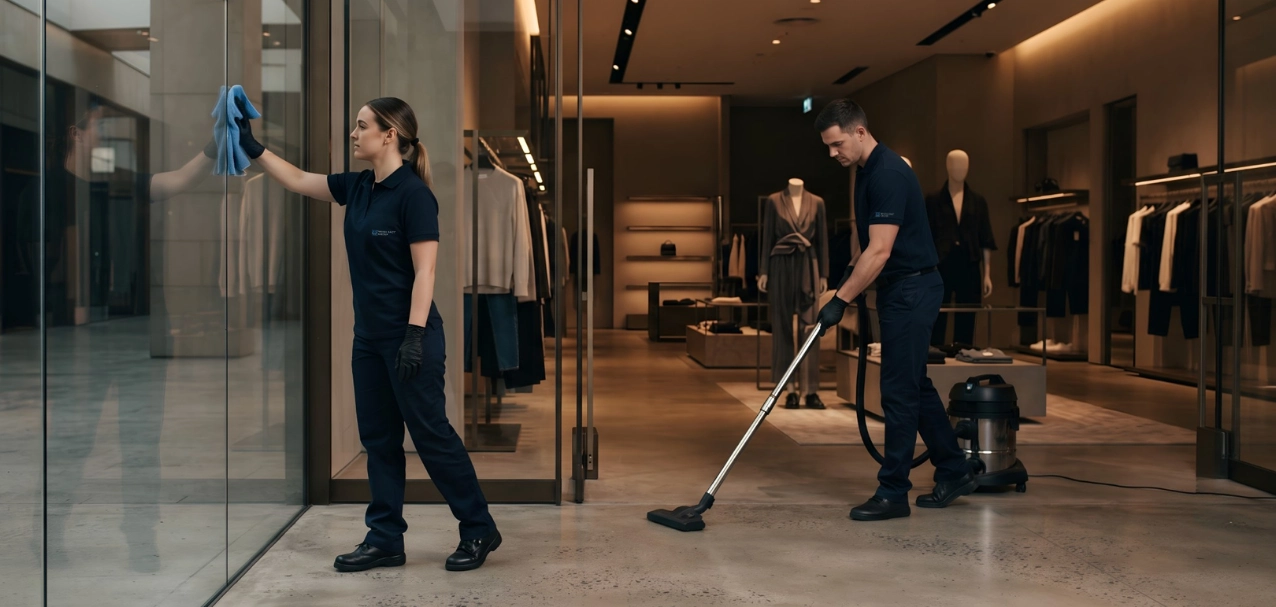
Retail store cleaning is often treated as a back-of-house service, but it sits right in the middle of loss prevention. Cleaners are in your store when it is closed, alarms are off, and stock is exposed. If access and controls are loose at that point, shrinkage is almost guaranteed over time.
This article looks at how retail store cleaning contracts link directly to stock security. We focus on keys, alarms, cash-office and high-value zones, and how cleaning teams log incidents so you have evidence-grade records that stand up to internal audit and insurer scrutiny.
Protecting Stock While the Store Sleeps
Most retailers accept some shrinkage in unattended zones, but a fair slice of that loss comes from poor after-hours control. Open stockrooms, relaxed key habits, and shared alarm codes turn the dark hours into a blind spot. Once a pattern starts, it can run for months before anyone can tie it to a root cause.
Cleaning should be treated as a control point, not just an appearance task. The way cleaners move around your store, what they can access, and how they report issues all affect stock exposure. When facility managers build loss prevention into cleaning scope and KPIs, night shift becomes a control in the risk framework instead of a gap.
In practice, the focus areas are clear:
• Keys and access devices
• Alarm and code control
• Cash-office and high-value stock isolation
• Structured incident logging every shift
Why Cleaning Contracts Matter to Loss Prevention
Retail cleaners are often last out and first in. That means they are the ones locking roller doors, closing back-of-house exits, and arming or disarming alarms. If their process is weak, every other control you have can be bypassed.
Across multi-site portfolios, common failure points include:
• Storerooms propped open during cleaning runs
• Keys sitting in tills or under counters, not in a controlled system
• Shared alarm codes for all contractors, never changed when people leave
• Informal rules such as "the cleaner knows the back-door code"
When the cleaning contract, scope of works, and KPIs are built without reference to the loss prevention plan, the risk register is incomplete. For organisations working to ISO 31000-aligned frameworks, that is a gap in control design. Cleaning needs to sit alongside security and facilities in the risk discussion, with clearly defined control owners and measures.
Designing Secure Access and Key Control Frameworks
Good key control starts with design, not with a sign-out book thrown at the problem later. Restricted key systems and electronic fob or card access should be planned so cleaners can do their job while only holding what they genuinely need.
Practical elements that work across large retail portfolios include:
• Site-specific key registers that clearly match doors and zones
• Photo ID for every cleaner, linked to their keys or access fob
• Logged key sign-out and sign-in, tied to shift times
• Standard procedures for lost or damaged keys, including who is called, how locks are rekeyed, and how costs are handled
Risk often increases when subcontractors and on-hired labour are used without clear controls. Ad-hoc key duplication, "spare" keys hidden in stockrooms, and extended weekend trading all add layers of complexity. A single, documented access and supervision model for all cleaning personnel reduces these variables and makes auditing simpler.
Alarm, Zoned Access, and Restricted Areas During Cleaning
Alarm systems should be configured so cleaning teams only disarm approved zones, not the entire site. Panic zones, safe rooms, and cash offices should remain armed or physically secured while routine cleaning takes place. This limits both temptation and opportunity.
Good code management includes:
• Unique alarm codes for each cleaning team or user
• Immediate disablement of codes when staff leave the contract
• Regular review of alarm logs by loss prevention and facilities together
• Simple, written rules about when alarms can be bypassed and who authorises it
Cleaning runs should be mapped against security patrols and back-to-base monitoring. Failure scenarios such as missed arming events, doors left unlatched, or repeated late arm times need clear engineering controls. For example, mandatory callback from the monitoring centre or auto-notifications to duty managers when set times are breached.
Cash Offices, High-Value Stock, and Controlled Cleaning
Cash offices should be treated as non-negotiable exclusion zones during normal cleaning hours. The core rules are simple:
• Physical barriers closed and locked
• CCTV covering the approach and door
• No cleaner left alone in the cash office under any circumstance
High-value categories like electronics, cosmetics, liquor, and tobacco need their own controls in the cleaning scope. That can mean sealed cages, nominated staff present, or clear "no access" lines on plans. Safe Work Method Statements (SWMS) should reference these zones specifically, not just generic "back-of-house".
Where deep cleaning is required in strongly controlled spaces, such as jewellery counters or secure rooms, treat it as a scheduled event. Use pre-approved attendance lists, sign-in and sign-out at a single control point, and align CCTV timestamps to the cleaning log. This keeps both stock and cleaners protected and delivers an evidence-grade timeline if an investigation is required.
Incident Logging, CCTV, and Evidence-Grade Records
A good incident log for cleaners is simple, fast to complete, and used every shift. It should cover:
• Near-misses, such as a door found unlocked
• Any damaged fixtures or signs of forced entry
• Miscounted keys or key returns out of sequence
• Open display cabinets or unsealed cages where stock could be taken
These records need to link into your existing systems. That means timestamps that align with CCTV, and categories that match your WHS and loss prevention frameworks. When cleaning logs are integrated with ISO 9001-style quality records and ISO 45001 WHS reporting, you gain a clear audit trail when something goes wrong.
Real incidents often start with small signs, such as a back door repeatedly found unlatched or a cabinet left open after close. When cleaners are trained to record and escalate that every time, you can intervene before a pattern becomes a sustained loss.
Aligning Contracts, Training, and Seasonal Trading Peaks
Seasonal peaks bring late-night trading, higher stock on hand, and more casual staff on the floor. Cleaning contracts should flex with that reality, not just in hours but in controls. Access, keys, and alarm rules may need temporary adjustment, and that should be written into the contract.
Key clauses to consider include:
• Staff vetting and Police checks for all after-hours cleaning personnel
• Formal induction into site loss prevention rules, not just WHS basics
• Competency checks on alarm operation and key control
• Refresher toolbox talks before major trading peaks
At White Spot Group, we build SWMS, toolbox talks, and site-specific inductions that cover both WHS and stock security obligations for high-risk retail sites. This includes clear scripts on what cleaners do when they find something out of place, who they call, and how they document it, based on practices that align with corporate loss prevention standards.
Lock in Stronger Controls Before Your Next Trading Cycle
The next 60 days are enough to significantly lift your controls, even without changing providers. Facility and operations managers can start with a simple plan:
• Conduct a key and access audit across all stores
• Review alarm users and remove old or inactive codes
• Map cleaning runs against alarm zones and security patrols
• Update incident logging templates and train cleaners in their use
From there, engage your cleaning and security providers in a structured review of scopes, KPIs, and incident workflows. Align these with your loss prevention strategy and risk framework so cleaning becomes a documented control, not a blind spot.
White Spot Group operates ISO-certified commercial cleaning and facility services across Australia and New Zealand, including complex retail assets. Our teams work with corporate, industrial, education, healthcare, government, and retail clients to design, implement, and monitor cleaning and security-aligned procedures that protect both your stores and your stock after hours.
Protect Your Stock With Cleaning Contracts Built For Loss Prevention
If you want cleaners who understand key control, alarm codes, cash-office restrictions, and incident logging, your contract needs to spell it out and be audited against it. Our ISO-certified retail store cleaning programs are structured around stock security, WHS, and clear lines of accountability, not just appearance. We work with asset, risk, and store managers to align cleaning scopes with loss prevention policy, CCTV coverage, and incident escalation protocols. If you would like to review your current specification or tender documents, please contact us and we can step through them with you.