A safe tank clean starts well before a shutdown window opens. In industrial and manufacturing facilities, tank cleaning is a controlled intervention around process residues, stored energy, hazardous substances, restricted access and restart risk.
Our specialist and high-pressure teams plan the work around your process, not a generic cleaning checklist. That means confirming what the tank has held, what remains inside connected equipment, and what standard must be met before production can resume.
How Does Safe Tank Cleaning Protect Planned Shutdowns?
Tank cleaning often sits within a planned outage, maintenance window or production changeover. If the scope is unclear, cleaning can hold up inspections, repairs and restart activities across the site.
Before work begins, we review the tank’s process history, including previous contents, residue type, connected pipework, agitators, heating coils, vapour spaces and nearby live plant. Cleaning methods are then selected for the actual conditions, whether that involves remote high-pressure cleaning, chemical treatment, vacuum recovery or controlled entry.
Spring shutdown planning can bring extra pressure before summer production schedules begin. For outdoor tanks, we also need to account for heat exposure, changing weather, stormwater protection and safe scheduling around other shutdown work.
What Must A Tank Cleaning Plan Establish Before Shutdown?
Industrial cleaning services in Australia should begin with a site-specific scope that is agreed before the shutdown starts. We work with your authorised site contacts to define responsibilities, permits, isolation points, cleaning methods, waste pathways and the acceptance standard for handback.
Current documents matter because plant changes are not always reflected in older drawings. A field walkdown helps us compare the paperwork with the tank, pipework and access conditions actually in place.
The planning pack should address:
- P&IDs, tank drawings, SDSs and maintenance history
- Previous inspection reports and known defects
- Site emergency arrangements and contractor requirements
- Cleaning chemicals, equipment, waste containment and disposal routes
- Clear acceptance criteria for cleaning verification
A Safe Work Method Statement, or SWMS, is required where the work is high-risk construction work. All tank cleaning still needs documented risk controls under applicable WHS requirements, site procedures and contractor management systems, even where a SWMS is not triggered.
For facilities operating an ISO 45001 system, we recommend retaining evidence of contractor competency, risk controls, corrective actions and pre-start reviews. This gives the facility a clear record of how cleaning risks were assessed and managed.
How Are Tanks Isolated And Made Safe For Cleaning?
Draining, venting and depressurising a vessel does not make it isolated. Product, pressure or automatic movement can still enter the tank through connected lines, control systems or stored-energy sources.
The facility’s authorised isolation controller should lead the shutdown and maintain the isolation register. We need every source identified before cleaning begins, including transfer pumps, electrical circuits, agitators, steam, compressed air, hydraulic pressure, nitrogen blanketing, heating systems and automatic control signals.
Where the risk assessment calls for positive isolation, valves alone may not be enough. Blanks, spades, spectacle blinds or disconnected pipework may be required to stop product entering the vessel while personnel or equipment are working inside.
Before opening the tank, our cleaning supervisor confirms that isolations are in place, stored energy has been released and locks and tags are secured under your site process. Any change to the plant status, isolation points or cleaning scope requires a review before work restarts.
When Do Confined-Space And High-Pressure Controls Apply?
Not every tank clean needs confined-space entry. Remote high-pressure equipment, external access methods and automated cleaning tools can remove the need for entry where they can meet the agreed cleaning standard safely.
When entry is required, we assess the work against AS 2865 Confined Spaces and applicable WHS regulations. Restricted entry, hazardous atmospheres, engulfment, oxygen deficiency, heat stress, residual chemicals and mechanical hazards all need to be considered, including conditions that may change during cleaning.
Entry controls should include:
- A confined-space entry permit and approved work scope
- Atmospheric testing before entry and continuous monitoring where required
- A nominated standby person and reliable communication method
- Ventilation, rescue equipment and a tested rescue response
- Controls for agitators, internal fittings and changing vapour conditions
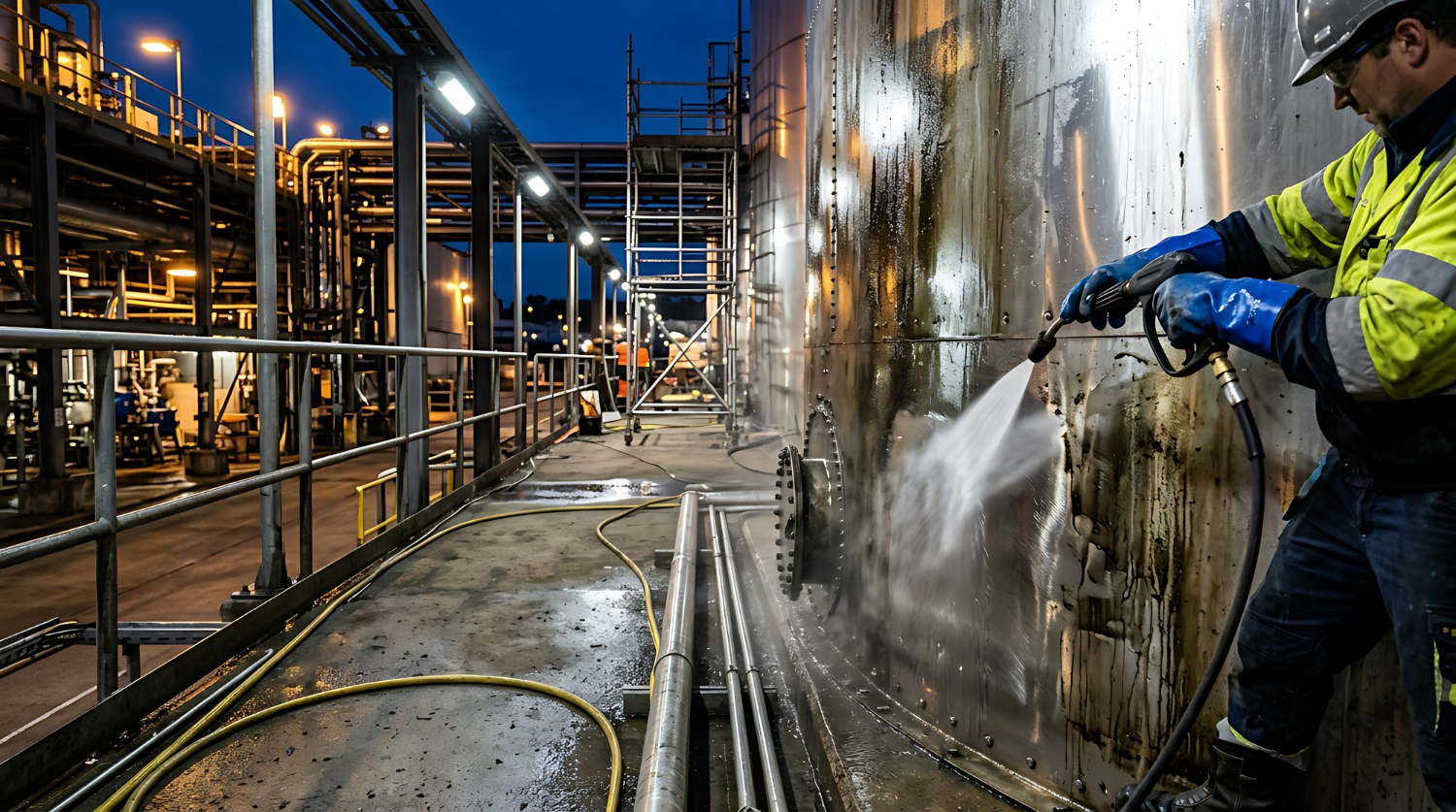
High-pressure water jetting also needs a dedicated plan under AS/NZS 4233.1 Safety in High Pressure Water Jetting Systems. Hose routes, exclusion zones, deadman controls, lance handling, nozzle selection, pressure ratings and equipment inspections should be set before jetting begins.
PPE is not the main control for high-pressure work. Physical separation, competent operators, controlled access and equipment maintained to manufacturer requirements reduce the likelihood of injection injuries, slips, flying debris, hose failure and contact with hazardous residues.
How Are Chemicals, Waste And Cleaning Results Controlled?
Chemical handling starts with current SDSs, compatibility checks and site-approved dosing methods. We also plan wash-water capture before cleaning begins, because sludge, residues and contaminated water must not enter stormwater systems or uncontrolled drains.
Waste may need containment, sampling and classification under the relevant state or territory EPA framework. Approved waste arrangements should cover recovered sludge, contaminated absorbents, wash water, chemicals and any residues removed from the tank.
Cleaning verification is different from mechanical integrity certification. We can verify that agreed sludge, scale, residue or contamination has been removed from accessible areas, while corrosion assessment, thickness testing and engineering approval remain separate facility responsibilities.
Depending on the scope, verification may include visual inspections, photographs, borescope checks, residue sampling, wash-water monitoring and inspection of internal fittings. We also confirm that cleaning equipment, temporary hoses, containment materials and other temporary controls have been removed.
What Must Be Signed Off Before Production Restarts?
A documented handback package gives your facility a clear record of the completed work. It should include closed permits, isolation status, waste records, cleaning photographs, chemical records, atmospheric monitoring results where relevant, identified defects and any areas that could not be accessed or cleaned.
Restart sign-off must be led by the facility, not the cleaning crew alone. Before product is introduced, the authorised site representative should confirm that personnel are clear, temporary controls are removed, isolation changes are approved, process connections are restored and nearby maintenance activities will not affect the restart.
A controlled handback protects people, reduces cross-contamination risk and gives operations a reliable record of the tank’s condition when production resumes.
Maintain Safer Tank Cleaning Controls
White Spot Group supports industrial and manufacturing facilities with documented cleaning scopes, site-specific SWMS and appropriately selected high-pressure equipment. Our industrial cleaning services in Australia are planned around tank access, residue type and isolation requirements. For a site-specific discussion, contact us to arrange an assessment of your tank cleaning requirements.