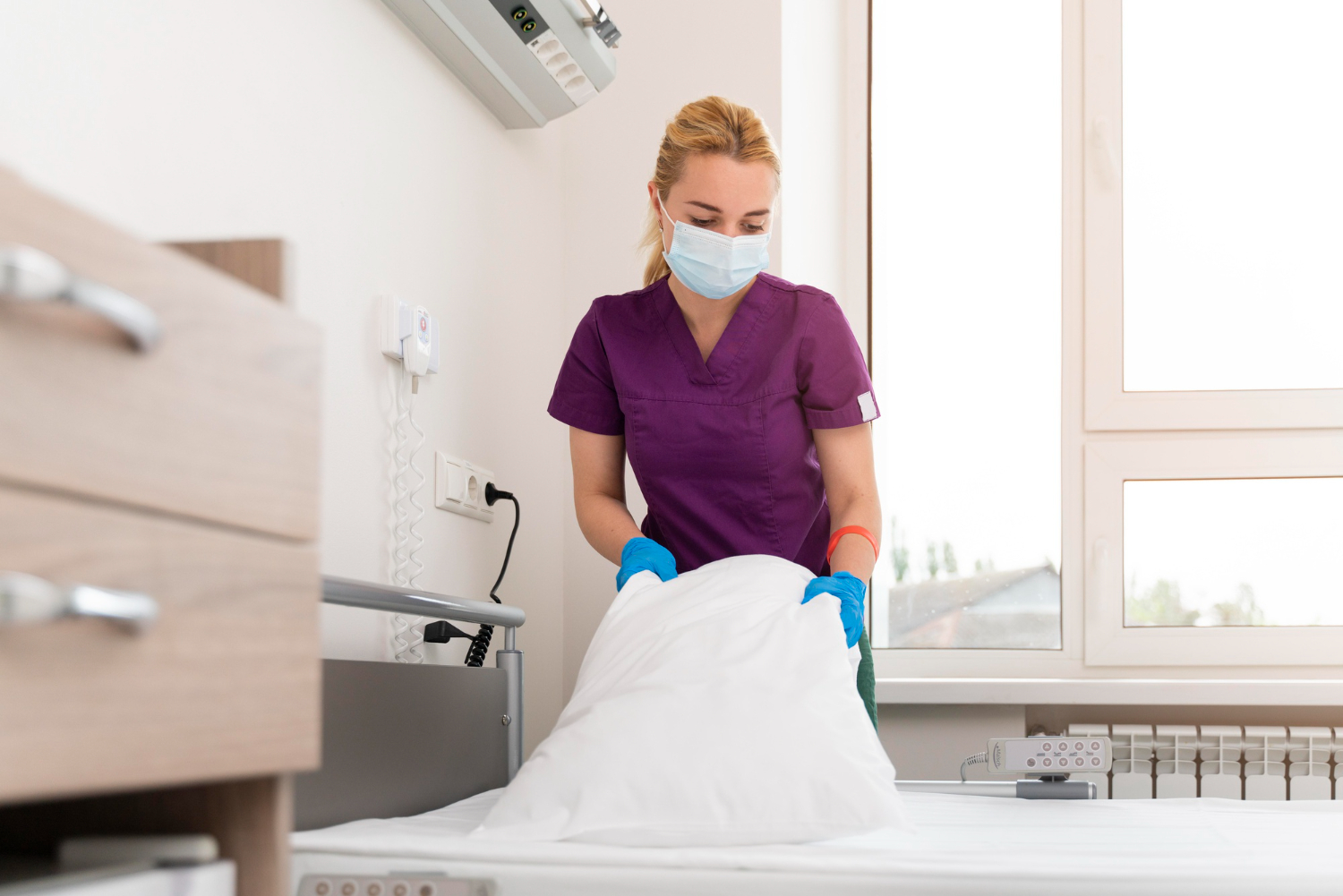
Medical centre cleaning in Sydney CBD needs more than an after-hours office-cleaning routine. We plan healthcare cleaning around patient movement, clinical activity, building access and each practice’s infection prevention procedures.
For medical and allied health practices, a clean space must also be a controlled space. Our role is to clean agreed environmental areas using documented methods, while your clinical team retains responsibility for clinical tasks and patient care requirements.
Why Does Sydney CBD Healthcare Cleaning Need Clinical Controls?
High-traffic CBD buildings create practical pressures that affect how cleaning is delivered. Shared lifts, limited loading areas, secure access cards and occupied reception zones all need to be considered before a cleaning schedule is set.
We treat medical centre cleaning as part of your practice’s broader infection prevention framework. Environmental surfaces, touchpoints, floors, amenities and public areas should be cleaned to an agreed frequency and recorded process, not handled as a generic office scope.
Guidance in the Australian Guidelines for the Prevention and Control of Infection in Healthcare helps inform site procedures, while NSW WHS requirements shape how we manage workplace hazards. The right products, equipment and work methods depend on the rooms involved, the clinical services provided and the risks identified at your site.
Spring can place extra pressure on entry areas in Sydney. Moisture, dust, leaf matter and pollen may be carried in from the street, so we schedule attention to entry flooring, matting and reception surfaces without interrupting peak patient arrivals.
How Are Consultation Rooms Cleaned Between Patient Sessions?
Consultation rooms, treatment spaces and allied health rooms need a room-by-room cleaning matrix. We work with the practice to identify what is cleaned, which approved product is used, the required contact time, how often work occurs, who is responsible and how completion is recorded.
Depending on the authorised scope, common environmental surfaces can include:
- Examination couches and patient chairs
- Door handles, light switches and privacy screens
- Clinician desks, worktops and sink surrounds
- Non-critical equipment exteriors approved by the practice
- Floors and accessible surfaces around the room
Our cleaning personnel follow manufacturer instructions for both products and equipment. We do not clean or handle clinical instruments, medication, patient records or sterile items unless these duties are specifically included in a documented and appropriate scope.
Work sequencing matters. We use a clean-to-dirty approach and follow any site requirements for colour-coded or segregated equipment. Reusable cloths and mop heads must be changed and managed according to the documented process, so cleaning equipment does not carry contamination from one area to another.
Cleaning removes dirt and debris from a surface. Disinfection uses an approved product for nominated surfaces where the practice has assessed a need, while sterilisation applies to clinical instruments and reprocessing activities. Medical centre cleaning can support disinfection of agreed high-touch environmental surfaces, but it does not replace the practice’s clinical sterilisation or infection control duties.
How Are Waiting Areas And Amenities Managed Safely?
Waiting rooms, reception zones, corridors and patient amenities receive frequent contact from patients, visitors, clinicians and contractors. We map these areas carefully so cleaning is visible where it needs to be, but does not disrupt privacy, check-in processes or accessible pathways.
High-touch surfaces should be listed in the site plan rather than left to assumption. Frequency should reflect patient volume, operating hours, service type and the practice’s risk assessment.
A practical waiting-area scope may include:
- Reception counters and permitted EFTPOS surfaces
- Door hardware, switches, chair arms and side tables
- Water dispensers, handrails and lift call buttons within the tenancy
- Amenity doors, basins, taps, dispensers and sanitary fittings
- Floors, mirrors and accessible facility surfaces
Amenities need close attention because they are shared throughout the day. Where hygiene consumables are included in the agreed scope, we check and record soap, paper towel and toilet paper levels, along with the condition of dispensers and fittings.
Clear escalation procedures protect everyone when something unusual occurs. If we find a spill, visible contamination, damaged fitting or a sharp in a non-clinical area, we follow the site process and notify the nominated practice representative. Sharps must never be handled casually by cleaning staff, and the area should be isolated until the practice’s approved response is carried out.
How Does Medical Centre Cleaning Fit Patient Traffic?
A workable cleaning schedule follows the rhythm of the practice. Appointment peaks, practitioner sessions, pathology collections, allied health consultations and building management rules all affect when tasks can be completed safely.
We document which tasks happen before opening, during quieter periods, after consulting hours and at agreed intervals through the day. Split-shift cleaning can suit practices that need an early clean plus a daytime touchpoint response in reception areas, waiting rooms and amenities.
Detailed room cleaning and floor work are often better placed after patient traffic has finished. During operational hours, our focus stays on safe, low-disruption work that respects patient movement and the privacy of clinical services.
Each site also needs controls while cleaning is underway. Wet-floor signs, cordoning, safe equipment storage, low-noise methods and clear egress paths should form part of the documented procedure. Cleaning trolleys must not block reception queues, accessible routes, fire exits or clinical circulation areas.
CBD access arrangements can change quickly. Lift bookings, concierge requirements, security passes, restricted loading dock times and limited storage space should be agreed with the practice manager, then reviewed when tenancy conditions or appointment patterns change.
What Should A Practice Confirm Before Cleaning Begins?
Documented WHS and infection prevention controls give both the practice and cleaning team a clear point of reference. We recommend confirming the site-specific scope of works, risk assessment, induction records, chemical register, current safety data sheets, cleaning schedules, inspection records and escalation contacts before services begin.
A Safe Work Method Statement, or SWMS, is required for high-risk construction work under NSW WHS laws. Other cleaning activities still need suitable risk controls and safe work procedures covering slips, trips, manual handling, chemical use, infection exposure, sharps discovery, aggressive behaviour, lone work and emergency access.
The final plan should reflect your actual layout and clinical activity. A physiotherapy clinic, GP practice, dental reception area and specialist consulting suite may share some cleaning needs, but each requires its own documented process, regular inspections and recorded corrective actions when requirements change.
Maintain Safer Clinical Environments
White Spot Group delivers medical centre cleaning programs for Sydney CBD practices that require documented routines, clear accountability and reliable quality checks. Our team works around clinical operating hours and high-touch patient areas to support infection-control requirements. To discuss a cleaning schedule for your practice, contact us.