How Does A Defined Scope Protect CBD Building Operations?
A commercial cleaning scope for a Sydney CBD office or multi-tenanted building should work as an operating document, not a generic list of cleaning tasks. We use it to make responsibilities clear across tenancies, common areas and back-of-house zones, so building operations are not interrupted by unclear handovers or missed work.
Your scope should cover lobbies, lift cars, shared corridors, amenities, loading docks, waste rooms, end-of-trip facilities and any agreed tenancy areas. It also needs to state who owns each task, when work occurs, how cleaners gain access and how results are checked.
Before mobilisation, we recommend building the scope from a site walkthrough, current floor plans, tenancy needs, building rules and risk controls. For Sydney CBD sites, this means allowing for restricted access, after-hours work, security requirements and winter wet-weather conditions that can affect entrances, matting and slip risks during August.
How Does CBD Office Cleaning In Sydney Handle Access?
Access arrangements should be written into the scope, not left to daily phone calls or assumptions. In CBD buildings, cleaning teams may need to work around loading-dock bookings, vehicle height limits, delivery windows, contractor sign-in processes and goods-lift availability.
The document should identify who books the dock, which lift is approved for equipment and waste movement, whether lift protection is needed and the permitted times for moving trolleys or bins. It should also reflect the building’s contractor management procedure, loading-dock rules and current emergency management plan.
After-hours work needs equally clear instructions. We record access-card allocation, security desk processes, tenant notification requirements and escalation contacts for locked areas, alarm activations or access failures.
A practical scope separates base-building work from tenancy cleaning. It should clearly state responsibility for:
- Common corridors, foyers and lift lobbies
- Shared kitchens, washrooms and end-of-trip facilities
- Waste rooms, chutes and loading-dock presentation areas
- Tenant offices, meeting rooms and restricted workspaces
Cleaners should not enter plant rooms, communications rooms or tenant areas without recorded approval. That protects the building, the tenant and the cleaning team when access conditions change after hours.
Which Tasks Keep Amenities And Floors Serviceable?
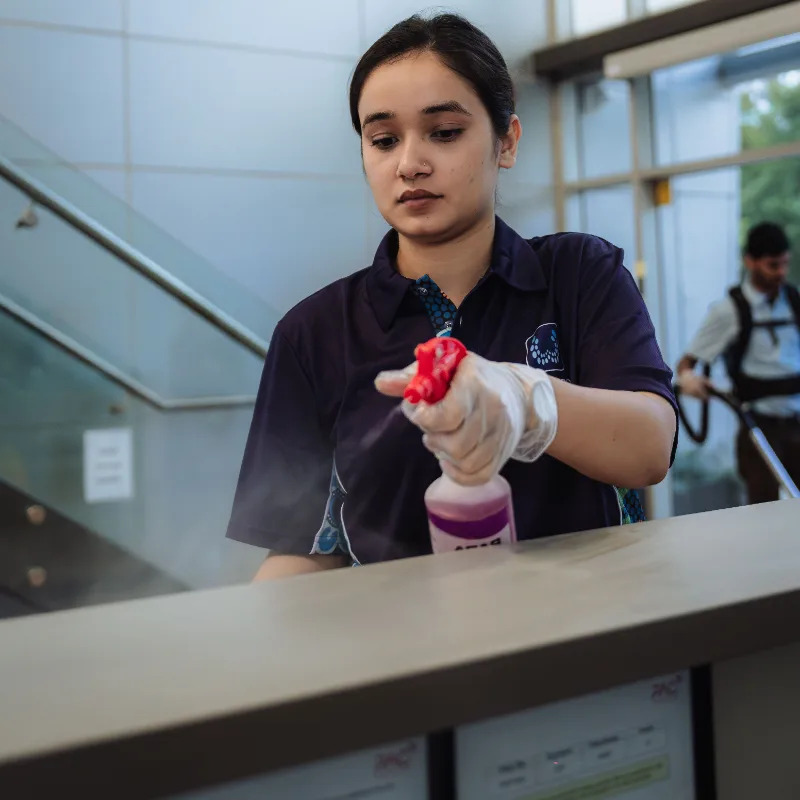
Washroom schedules should reflect location, operating hours and likely occupancy. We define cleaning and disinfection requirements for fixtures, touchpoints and floors, along with restocking of soap, paper products and sanitary disposal supplies.
The scope should also require odour checks, blocked-fixture reporting and a clear escalation path for plumbing faults that need building maintenance. A cleaner can report a fault promptly, but building management needs to know who takes ownership once the issue moves beyond routine servicing.
Waste handling needs the same level of detail. Your site waste plan and waste-room rules should identify collection points, bin presentation times and the streams that apply, such as general waste, commingled recycling, cardboard, organics where provided and confidential paper.
For floor care, the method must suit the surface. Carpet, stone, vinyl, rubber, hard flooring, entry matting and lift floors all need different products, equipment and drying controls, based on manufacturer care instructions and chemical safety data sheets.
During Sydney’s winter wet weather, we include a documented response for moisture at entrances and lift lobbies. This normally covers increased inspections, mat servicing, moisture removal, warning signage and recorded rectification of slip hazards identified in the facility’s slip-risk assessment.
Which WHS And Security Controls Belong In The Scope?
WHS controls should match the work actually performed at the site. We include safe work procedures for routine tasks, chemical registers, current safety data sheets, manual-handling controls, equipment inspection records and worker competency requirements.
Where high-risk construction work applies, task-specific SWMS may also be required. The scope should align with the Work Health and Safety Act 2011 NSW, the Work Health and Safety Regulation 2017 NSW, SafeWork NSW guidance and the building’s contractor induction requirements.
Wet cleaning, floor machines, electrical leads and chemicals need specific controls because they can affect other occupants. The scope should require suitable barricades, warning signs, cable management, correct chemical dilution, secure storage and immediate spill response.
Security is equally important in CBD office environments. We recommend documenting:
- Identity verification and contractor induction requirements
- Access-card and key-control registers
- Restricted-area rules and approved-access records
- Confidentiality obligations and no-photography rules where required
- Incident reporting for lost keys, damaged cards or security breaches
Where ISO procedures apply to a site, the current certification scope and relevant procedures should be checked before they are included in the contract documents. That avoids broad compliance statements that do not match the actual service arrangement.
How Should CBD Office Cleaning In Sydney Be Measured?
A workable scope needs measurable service levels. Terms such as “clean as required” leave too much room for different interpretations, especially where several tenants, security teams and building contractors share the same site.
We set frequencies, service windows, task ownership, inspection points and acceptance criteria for each area. This can cover lobbies, meeting rooms, washrooms, shared kitchens, waste rooms, lift cars and high-touch common areas.
Inspection evidence should be available for review rather than relying on verbal assurances. Depending on site rules, this may include time-stamped reports, inspection forms, consumable checks, defect logs, approved photographs and rectification records.
A monthly performance review gives building managers a structured way to address recurring issues. We recommend reviewing inspection scores, defects, response times, incidents, tenant complaints, waste issues and any changes to occupancy or access arrangements.
The scope should also state how non-conformances are raised, who approves corrective actions and when unresolved matters are escalated. Where applicable, these controls can align with the site’s ISO 9001 quality-management procedures and its existing inspection regime.
How Can Managers Put A Site-Ready Scope Into Operation?
Before cleaning begins, arrange a joint walkthrough with the facility manager, building manager, security representative and cleaning supervisor. Confirm access paths, dock bookings, goods-lift rules, waste routes, restricted areas, emergency exits, cleaning stores and after-hours contacts while everyone is on site.
Turn those findings into a site-specific task matrix covering locations, frequencies, service windows, responsibilities, WHS controls, consumable needs and inspection criteria. August is a useful review point for Sydney CBD facilities, particularly for wet-weather entry controls, matting capacity, slip-response procedures and after-hours access arrangements before winter conditions disrupt tenants, visitors or building operations.
Keep Your Office Cleaning Scope Accountable
White Spot Group can align service delivery with your building’s access protocols, WHS requirements and tenant expectations. Review our approach to CBD office cleaning in Sydney for corporate workplaces requiring documented quality controls. If you need to refine an existing scope or establish a new service arrangement, contact us to discuss your operational requirements.